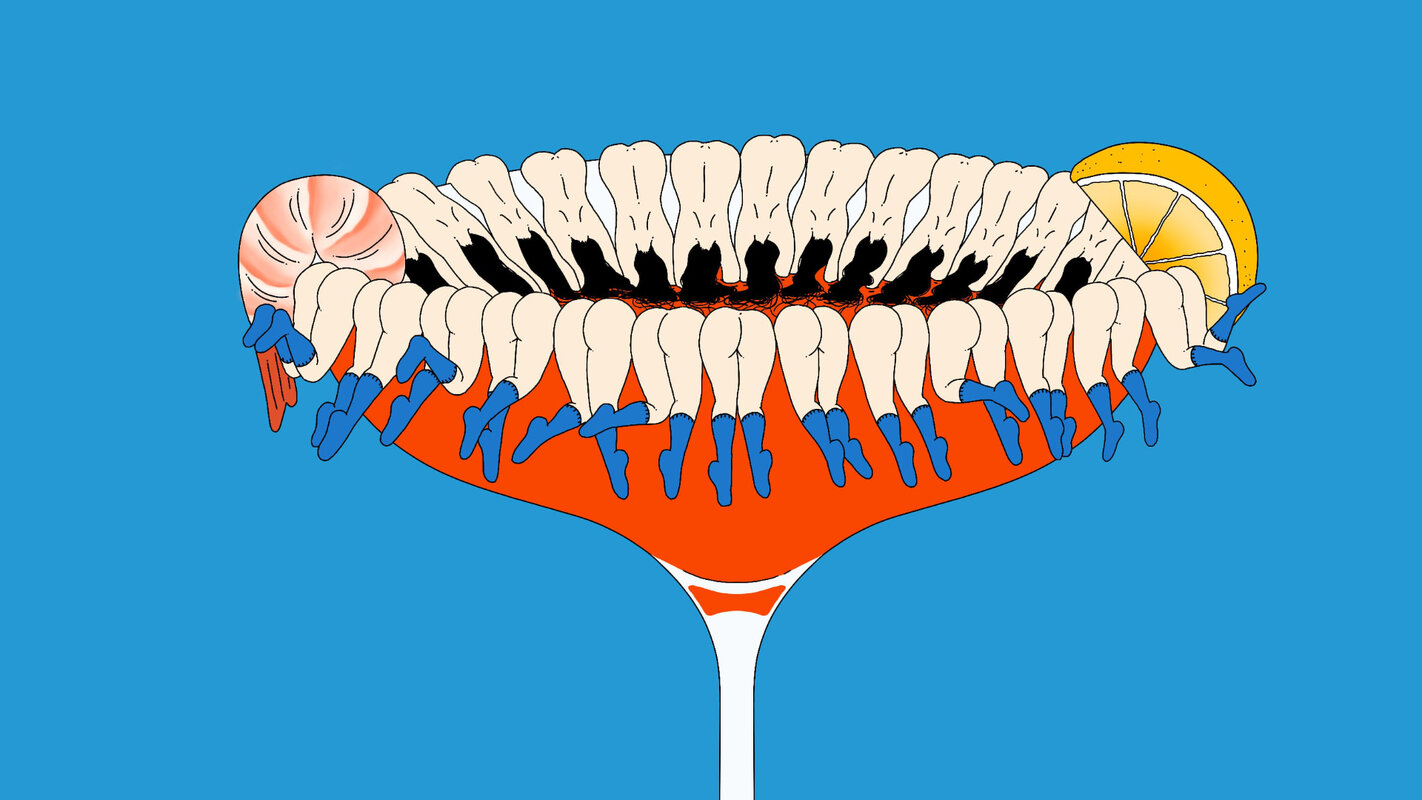

Sawako Kabuki: Animation, the Female Body, and Humor as a Natural State
Preparing for the upcoming 12th PictoNYC 2026 conference, we spoke with the Japanese animator and illustrator Sawako Kabuki about the instincts, doubts, and decisions behind her work, full of unpredictable transitions that flow between scenes that are unexpected yet seamless.
Pictoplasma: Take us through your creative process—do you start with an idea that you then put on paper, or do you just start drawing and the idea develops as you go?
Sawako Kabuki: Usually, I start with a vague idea or image. I don't really plan everything before I start drawing. I just begin, and the ideas and movement develop as I go. I like figuring things out while I'm making it. If I decide everything in advance, it starts to feel like I'm just executing a plan, which isn't as fun for me. I enjoy finding things I didn't expect along the way.
You've been living in New York for a couple of years now—coming from Japan, how has that shift changed the way you work or what you make?
My work mostly happens at home by myself, so even though I moved to New York, the way I make things hasn't changed much.
It's not like I'm constantly meeting people or going to exciting places. My daily life is actually pretty quiet in both cities. To me, Tokyo and New York have a similar atmosphere. Europe feels very different, but New York somehow feels much closer to Tokyo, at least intuitively.
If anything, life has become a little less convenient. Everything is more expensive, and sometimes there's a language barrier. In that sense, living here feels a bit more like survival than it did in Japan. But I'm not sure if that has had a direct impact on my work.
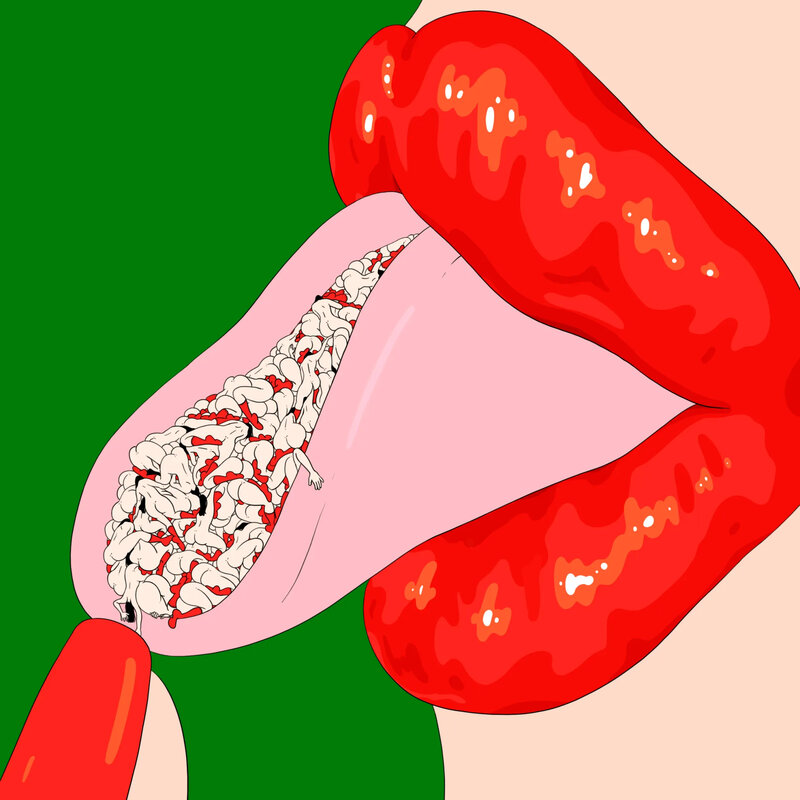
The body appears in ways that feel connected to a Japanese tradition of ero guro—absurd, physical, not quite erotic but not quite not. Is that a lineage you recognize?
I think there probably is some connection. I was definitely drawn to that kind of imagery when I was younger, especially in elementary and middle school.
I've always liked contradictory feelings. Something you want to look away from, but can't stop looking at. Or something that should smell bad, but somehow feels like it might smell good. I don't consciously think about the ero guro tradition while I'm making my work, but looking back, I can see how that sensibility may have stayed with me.
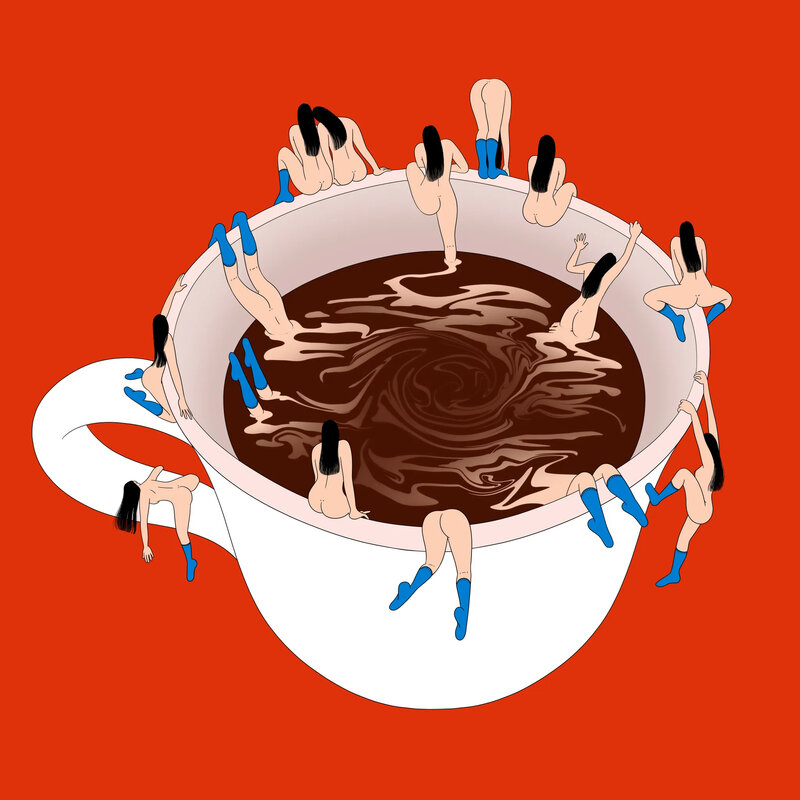
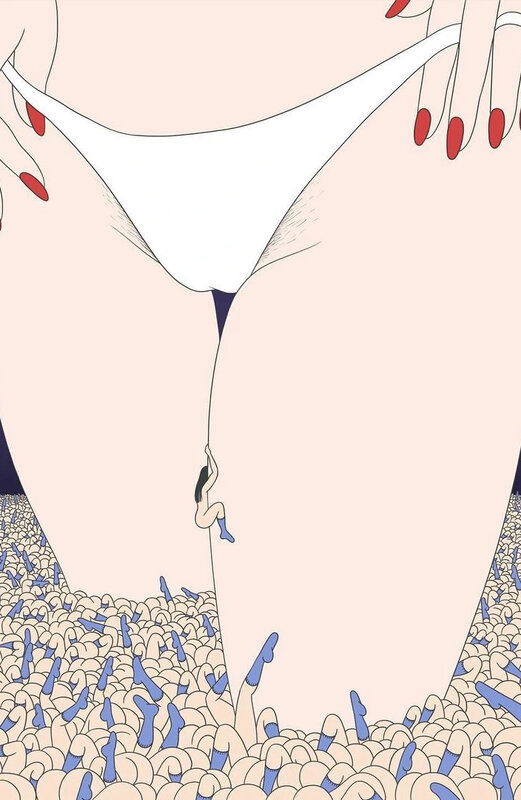
There's something very specific happening with scale—women dripping from noses, bodies appearing where you wouldn't expect them. Where does that come from, and again, are there cultural references that fed into it?
I'm not really sure where it comes from. But I've always been fascinated by the contrast between things that are extremely large and extremely small. I feel that when I think about the universe, too. Maybe that's where some of the unusual sense of scale in my work comes from. Looking back, I've also often drawn images of fluids or other things coming out of holes in the body. Noses, mouths, butts, things like that. I remember my high school art teacher asking me, "Why do you always draw things like this?" I didn't really have an answer then, and I still don't. I don't think of it as a symbol for something. I'm simply drawn to those kinds of images on a sensory level.
Do you experience illustration and animation as two different practices, or is it all part of one mode of expressing?
I think I use illustration to do things that would be difficult in animation, and I use animation to do things that aren't possible in illustration.
For example, in my illustrations I often use very thin lines or draw lots of tiny characters. I wouldn't do that in animation because it would be too much work to animate.
What I like about illustration is that I can do whatever I want without thinking too much about how long it will take. With animation, I don't have to make every single frame a perfect image. If the movement works, that's enough, and I really like that.
The animation has a quality that feels very hand-made—almost like it's breathing. Is that something you consciously work toward, or a byproduct of how you draw?
I don't really think about it, and it's not something I'm consciously aiming for. I just think it's more fun when things are constantly moving, so I think I naturally animate that way.
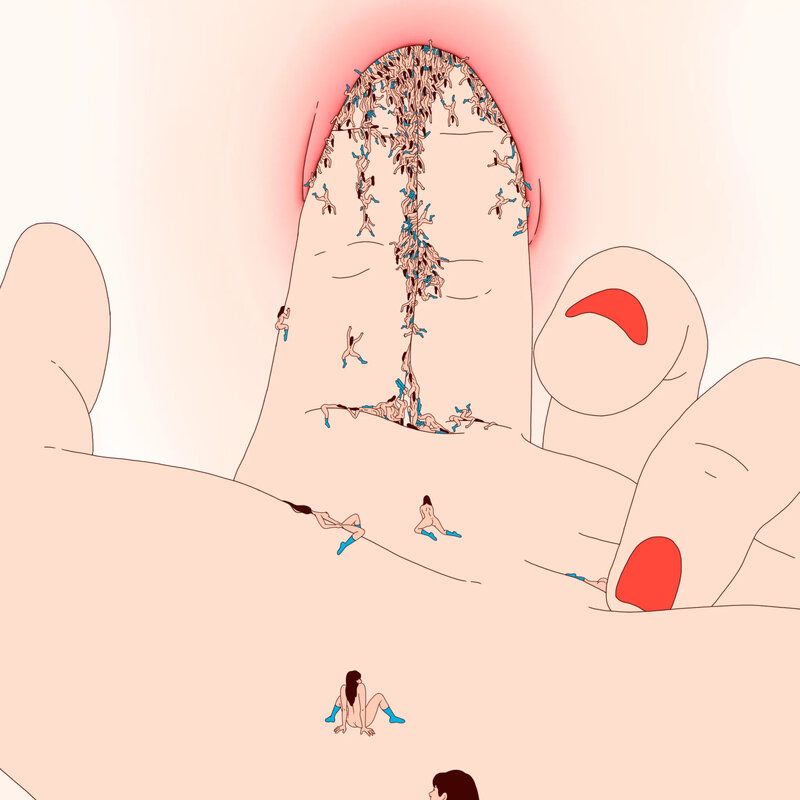
So much of what you make is very funny—and it seems to come naturally. Is humor something you actually think about and construct, or does it arrive on its own?
I don't really think about humor while I'm making something. It's just become a natural part of the way I see things.
There was a time when I made work that transformed difficult memories and uncomfortable experiences into something humorous. Looking back, I think that gradually shifted into something lighter and more playful. I just like the idea of people enjoying my work. I hope they have fun looking at it.
And honestly, I still find things like poop and pee endlessly entertaining. I guess there's a part of me that never really grew out of that. That's pretty much the energy I bring into my work.
Interview by Pictoplasma on the occasion of the 12th Berlin NYC, 2026
- 96 views
- 1x empathizes
