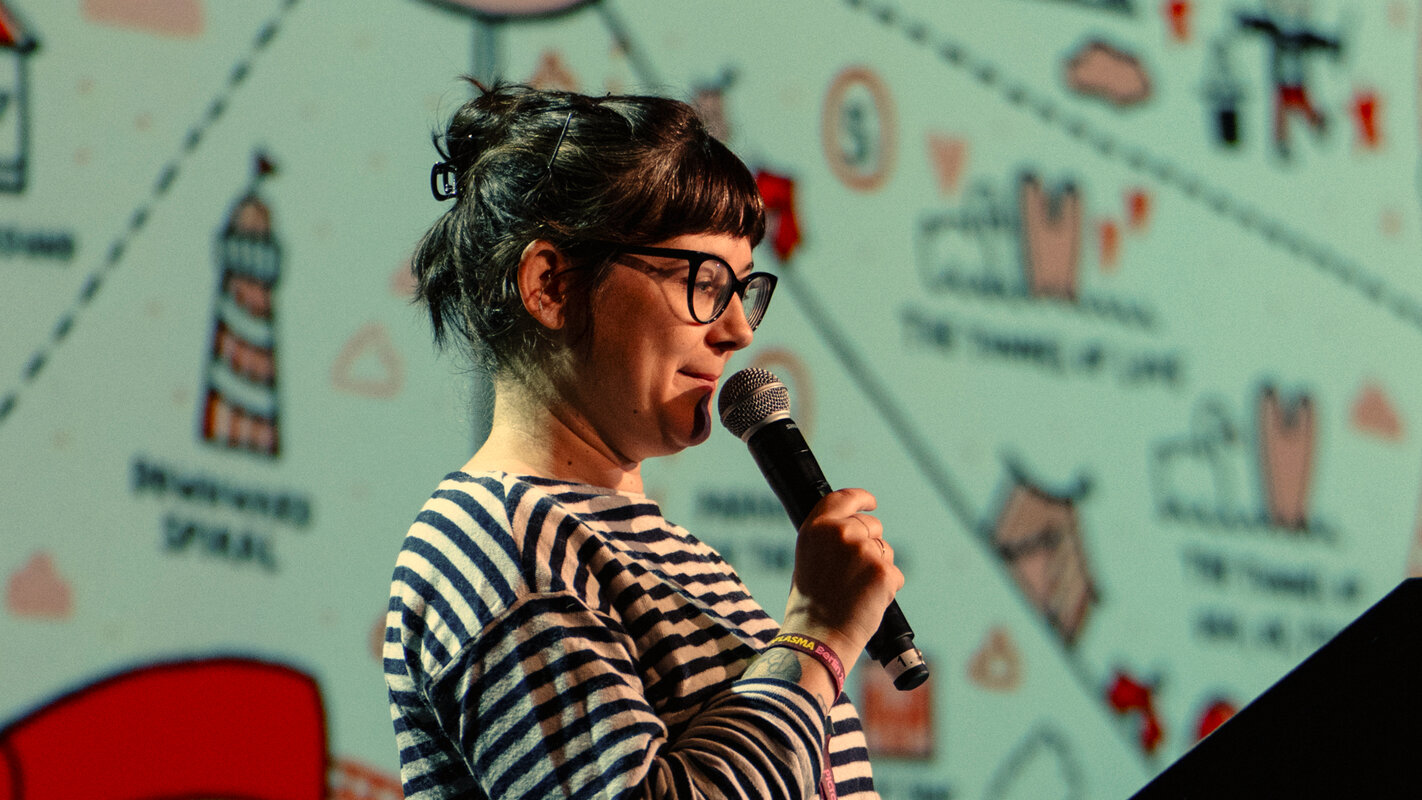

Gemma Correll: Anxiety, self-portraiture and the humor of the unbearable
A few days before speaking on the stage of Pictoplasma Berlin's 22nd Conference, award-winning British cartoonist Gemma Correll released her 400 pages graphic memoir debut, chronicling her lifelong experience with anxiety and depression. "Anxietyland" immediately went on to be a National Bestseller, featured in The New Yorker, NPR – and Molly Ringwald's Inaugural Book Club Pick!
Pictoplasma: When did you first start drawing yourself as the main character of your work—and was it a deliberate decision, or did it happen gradually?
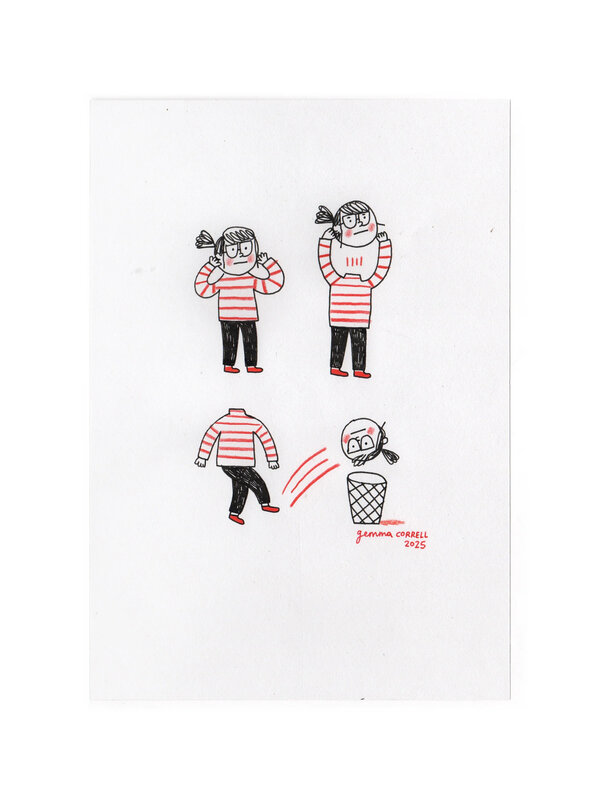
Gemma Correll: I started drawing myself as a character in my doodles and sketchbooks at a young age but I didn’t want to “take up space” with myself and my own thoughts and feelings—I thought it made me seem self-centered—so when I was drawing something that would be seen by others, I usually drew other characters. When I wanted to draw something more personal, not necessarily meant to be seen by others, then I would draw myself. It wasn’t until I started sharing more of my personal work (online and in zines) that I made a tentative decision to show her/myself more. But even then, it was a gradual process of accepting that it was OK to “take up space” in character form!
How has that depiction of yourself changed over time? Is the Gemma in your drawings still recognizable as the same character from ten years ago?
I think she is still quite recognizable. She has become more simplified and codified as a character but the essence of the character is still there. She didn’t always have a “uniform” (red stripey shirt) but those changes have become necessary as I draw her more often. I need her to be easily spotted, just like the Where’s Wally (Waldo) that she is so often compared to. For the record, Wally and Gemma really only have the red stripey shirt, and (different shaped!) glasses in common.
When did you first decide to talk openly about mental health—not just hint at it? What made that feel possible and comfortable?
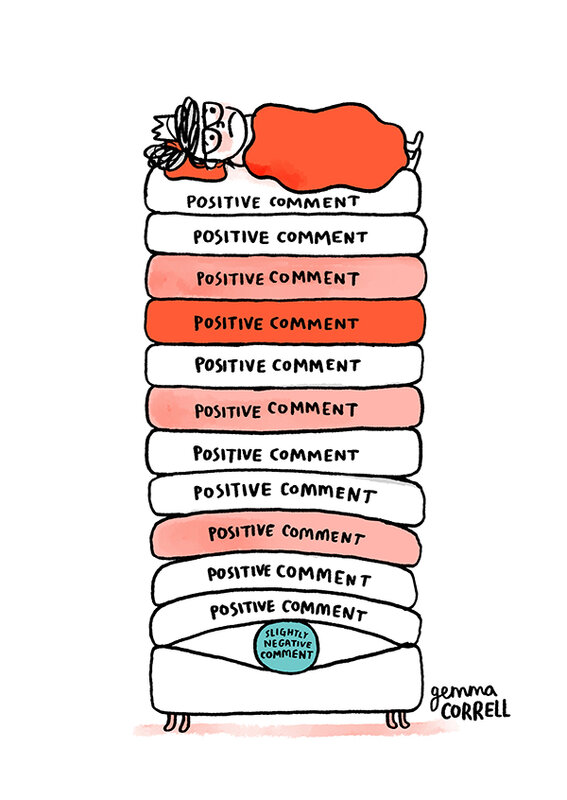
In the early days of social media, I shared a couple of very loosely mental health-related comics online. They were (generally) well-received, so I became braver about sharing more detailed and specific works. Now, I am totally comfortable with sharing everything, as I want to be as honest as possible.
Your work is often very funny and very dark at the same time. Is humor a way of making difficult things bearable—for you, and for the reader?
Yes, I think that humor can be very cathartic. It is for me, personally—it can help disrupt the rumination and overthinking cycles that I have a tendency to get into, and help reframe feelings that seem unmanageable. Sometimes, it’s a case of “If I don’t laugh, I’ll cry… or maybe I’ll do both.” and I’ll feel better for that release. I hope that it does the same thing for the reader, although everybody’s reaction is different.
Are pugs a side track, or is there something about them that connects to the larger themes of your work?
Pugs are very funny creatures with serious faces, so I think that side of them connects to my work—that mix of humor and pathos. They have been a part of my life for 16 years now (and longer, if you count the time I was dreaming about having a pug before I actually got one) so we’re inextricably linked at this point!
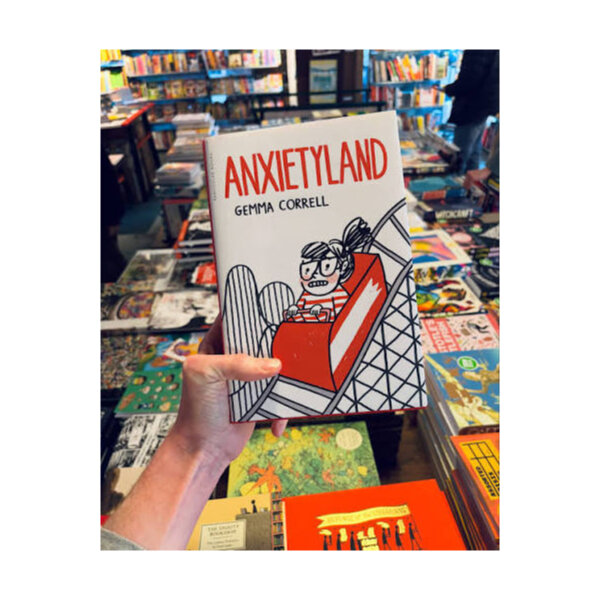
Anxietyland is structured as a trip to an amusement park. Is that purely a dramaturgical decision, or do places like that carry something heavier for you?
I am a big fan of amusement parks and have included them in comics before. I do like the fact that they are a self-enclosed world, which lends them as a framework for something like a graphic novel. I began with the obvious metaphors, like the emotional rollercoaster and then, the fun part for me was thinking up the other rides. What would they be called, and how would they relate to moments in my life or facets of my anxiety? I also wanted to create something that would have a map. As a visual person, I love maps and I decided to use one as a sort of contents page. I liked that I could look at it and know where I was in the book and in time.
I also enjoy amusement parks as a method of catharsis. They’re the one place you can go and nobody cares if you’re screaming, or making a fool of yourself (within limits, obviously). It’s normal and expected to feel anxious before the big drop on a rollercoaster and nobody is going to look at you strangely when you yell on the way down!
The book has become a National Bestseller and Molly Ringwald kicked off her new Book Club with it. Did that level of reception surprise you—and does it change anything about how you think of the work?
I was certainly surprised by the bestseller status because a Graphic Novel about mental illness is certainly a hard sell, especially in the US. A lot of people won’t read a graphic novel at all—they think that comics and illustrated books are for kids. I knew that Molly Ringwald was receiving a book (I contacted her myself because she already followed me on Instagram) but I did not expect her to select it for her Book Club! I sent out a lot of copies not really expecting much but the reception has been amazing. I suppose it should give me more confidence about the work but honestly, I still tend to focus on the negative reviews.
Your work is very specific to your own experience—and yet clearly strikes a nerve with a lot of people. Do you think it connects precisely because it is so personal?
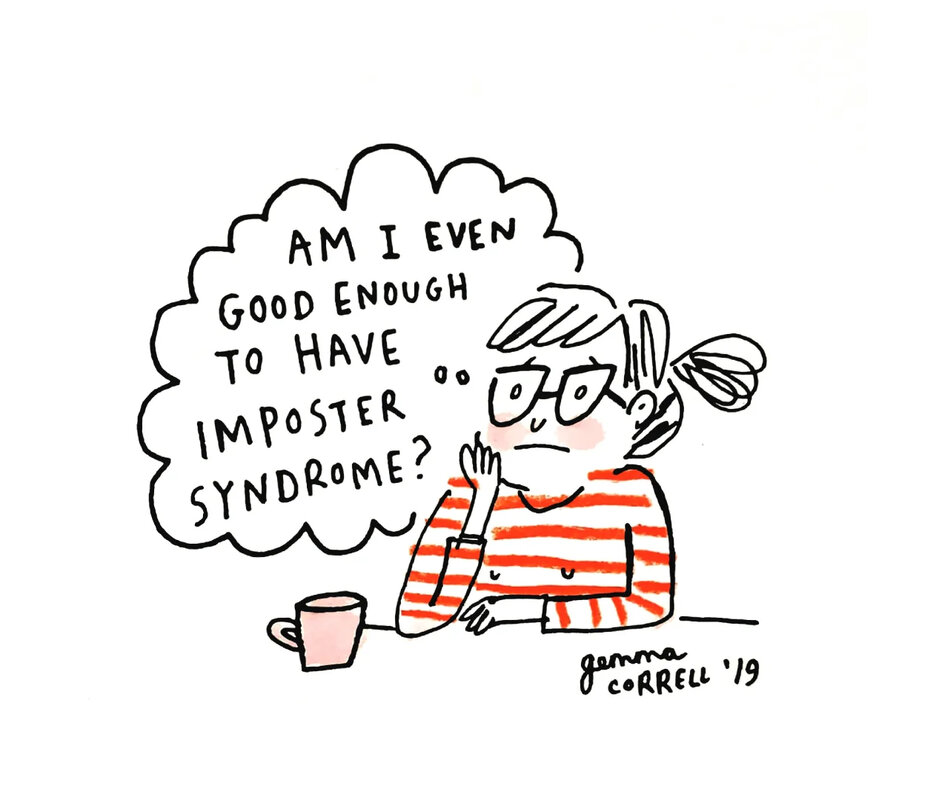
Yes. I think that although the specifics of an experience might differ, the core of what I depict in my work is recognizable by a lot of people. Everybody has anxiety. That’s a normal human emotion. Everybody has bad days. They might not have a clinical anxiety or depressive disorder, but there are still elements that they can recognise. By telling it from my own point of view, I add the personal touch. It’s not just dry information from a text book but real, lived experience.
Are there things you have decided not to draw—and what makes something off limits?
I don’t draw or write about experiences that are not my own. I may feature people (and animals!) that are involved with my own experiences but I never try to speak “for” them. I only recount the specific things that they have said and done, to the best of my ability and memory, of course. For me, using somebody else’s story without their permission is strictly off-limits.
Do you consider yourself part of an artistic community—illustration, comics, graphic novels—and does that belonging (or the lack of it) shape how you work on personal themes?
I definitely have peers and would consider myself part of the illustration/comics world, although most of the interaction happens online. It’s only at the occasional event (like Pictoplasma!) that I actually get to meet and hang out with these people. I feel like we do support each other, just through texts and DMs most of the time, which gives me the confidence to keep working on the personal stuff. Seeing other people do the same sort of thing and sharing their own personal work is very inspiring.
After a project as big as this, is it easier or more difficult to even think of the next?
It’s easier to think of the next project now because I know that I can make a longform graphic novel. I wasn’t entirely sure that I could do it when I started working on Anxietyland, and on various points along the way. I wanted to give up many times but in the end, I got it done. So now I have a little more confidence in my ability to make something of that size! And anything smaller seems easy (although of course, it isn’t really—and in some ways, simplicity and brevity is much harder than longform).
Interview by Pictoplasma on the occasion of the 22nd Berlin Conference, 2026
- 93 views
- 2x empathizes

