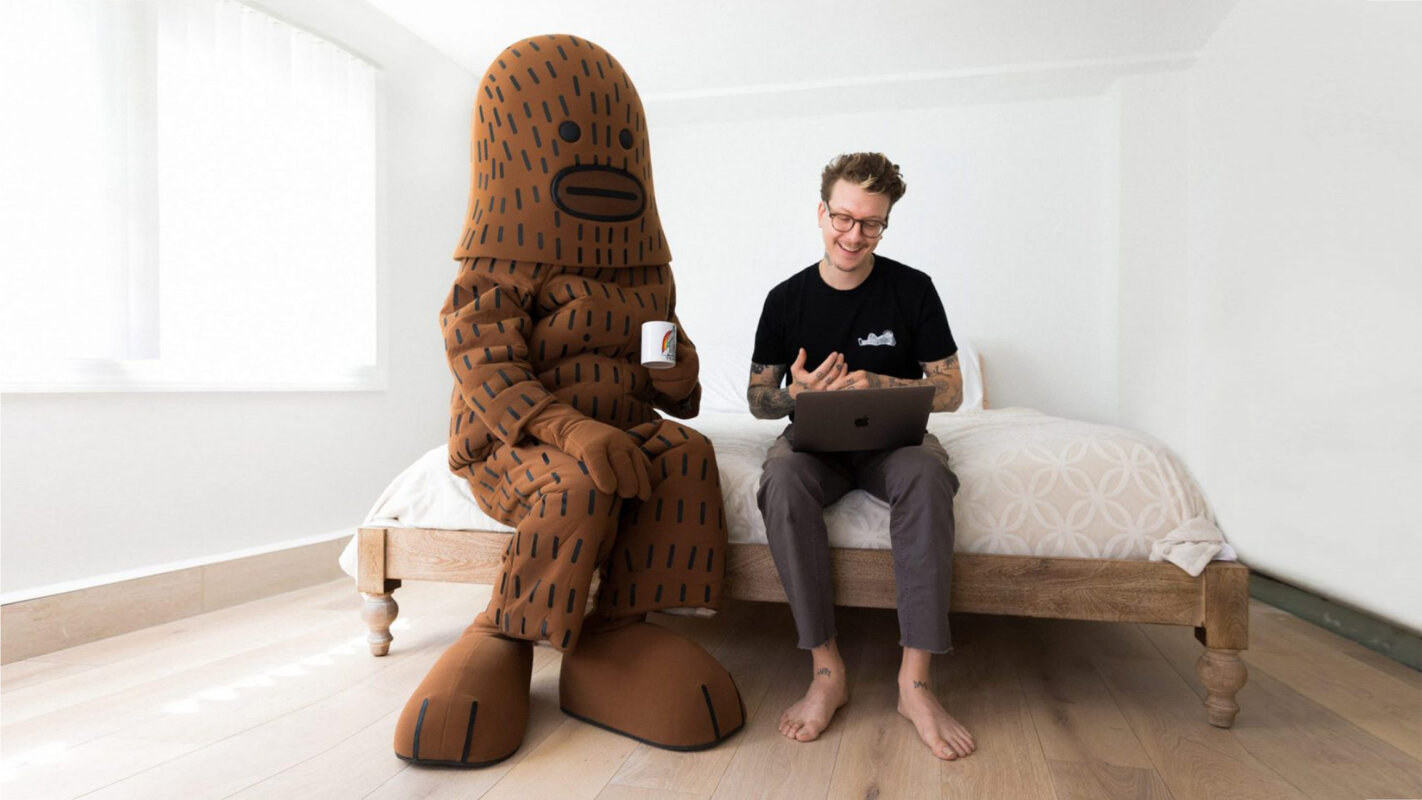

Frank Ape: on Street Art, Character, and the Question of Who Shapes Whom
Frank Ape (Brandon Sines) is a New York based artist whose character driven practice explores identity, emotion, and shared social experience. Working across media, he employs a distilled visual language to examine the relationship between the individual and the collective. His work reflects the evolving role of the contemporary artist — part storyteller, part activist, and part mythmaker.
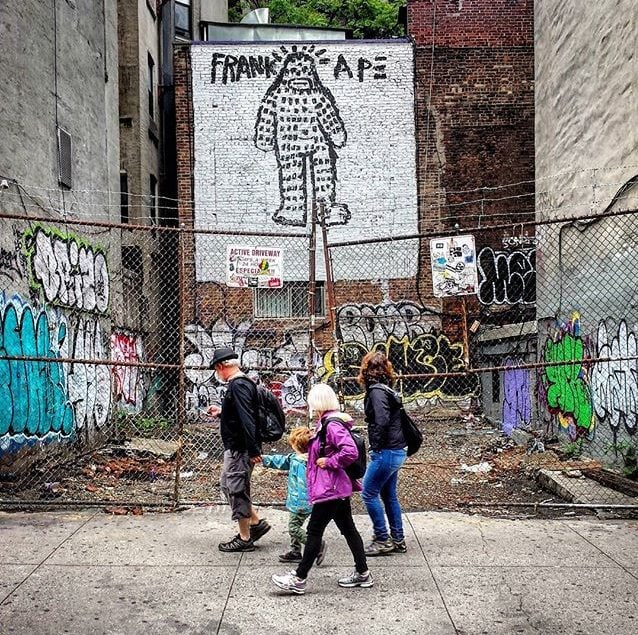
Pictoplasma: Frank Ape emerged from the streets of New York City. What is your connection to the street art scene—and how has that relationship changed as the work has grown?
Frank Ape: I was inspired by street art, especially in NYC and loved the DIY, punk-rock aspect of just being able to come up with an idea, put it out there and watch the neighborhood and visitors respond. The act itself is a rebellion even when the messages are positive and then the art that remains can be interpreted so many ways. I dig all these elements.
It’s kind of interesting that at the same time I began, Instagram had just launched so seeing the digital cat and mouse take place was also a lot of fun.
No matter how big Frank gets I hope I feel free enough to do an illegal wheat/paste and tag a wall when I get the urge.
You just had a major gallery show in New York. How does that context change the work—or the way people encounter it—compared to the street?
I think the energy is pretty similar and probably the major difference is that when you go to a gallery you know you are going to see some art, but when you encounter a piece on the street it can be a real surprise which adds to the umph of the message.
How did the Frank Ape character come about—what was your inspiration and what helped you define the iconic look?
I was in a transitional period in my life and coming out of some pretty negative situations. I was channeling visual art for the first time since childhood and really using it as a way to express ideas and emotions I was feeling. A character kept popping up in pieces I was making, and someone asked me its name, and Frank was the first name that popped into my head.
I think Frank came about as a way to express deeper personal ideas with the safety of the character to hide behind. Then realizing how impactful the simplicity of the character was I made sure to keep it simple.
When did you realize it had become more than just a figure—that it was actually a character and voice for something bigger?
Early social media was a big part of that. I would put up some art in the middle of the night, wake up the next day, and see people who connected with it post photos and comments.
I would often get messages and more and more people telling me in person how they were dealing with various challenges and experiencing a Frank piece on the street completely changed their outlook or gave them a positive boost. That’s when I knew it was something bigger.
Since the early days I’ve connected with a lot of people on this journey. I've had teachers let me know they've done lectures for their students on Frank, people with terminal illnesses reach out because a Frank painting in the waiting room at MSK made them smile. It brings a tear to my eye to think about all the stories and it truly is bigger than just me.
Frank Ape has been around for fifteen years. Has the visual language of the character absorbed the styles and moods of each era—street culture, design trends, the internet—or has the look stayed on its own terms throughout?
In the beginning when I was doing a lot of street art and first introducing the character I would often recreate famous movie moments, album covers and pop culture references to include Frank. I think this was a bit trendy at the time but I was also doing it to let people know Frank was here and a part of the culture. From then I think I've been doing my own thing and consciously not hopping on too many trends.
What are the limits of focusing on one single character—and what does that constraint actually enable?
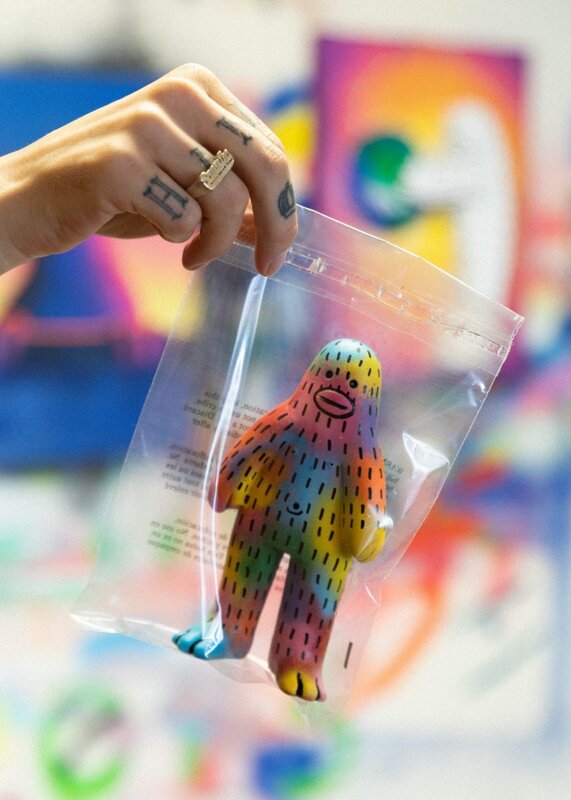
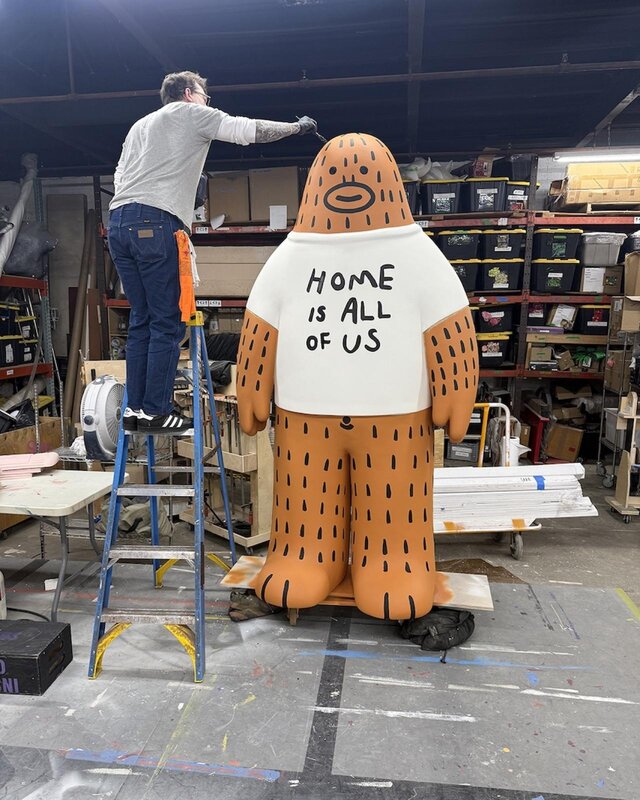
I truly don't feel there are too many limits when focusing on Frank as I can literally do a completely original piece and have the smallest Frank reference for it to be a part of this body of work. It's like a little signature. I also can experiment and push myself with so many different materials it never gets boring.
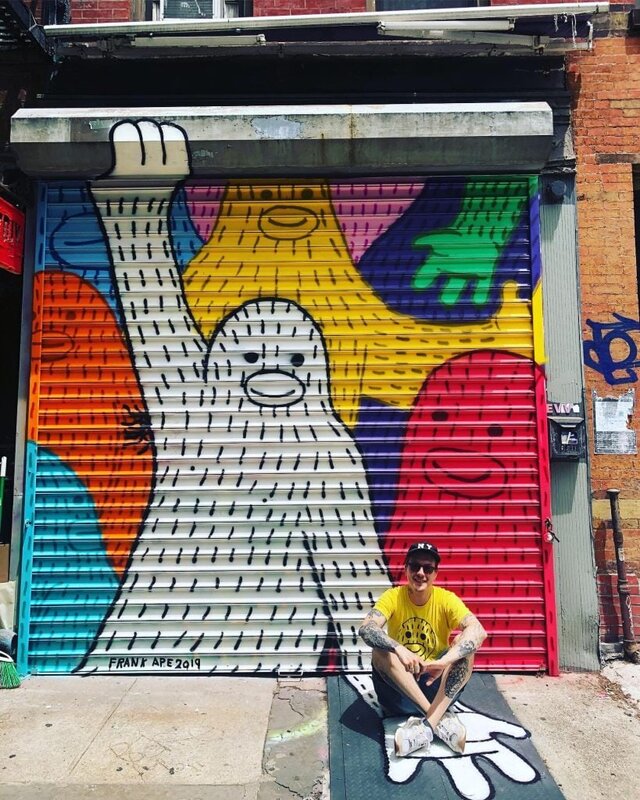
Connection, authenticity, compassion—these run through everything Frank Ape does. Where does that come from for you personally?
I want to feel good about myself at the end of the day and these feel like things worth fighting for and spending time expressing. It's easy to lead with ego and be unkind and I've been on that end of the spectrum as well when I was much younger, but it serves no one and just makes everything worse.
How present is New York in the work today—is the city still feeding it, or has it become more of an origin story?
Aw, I like this question. The city continues to inspire the work still but the city does feel different than when I started off in 2011. It’s funny, I change, the city changes, but at the same time there are consistent channels of inspiration. Two main ones are the physical space of the city and the incredible range of humanity. I love the history of the city and am so thankful to be a part of it.
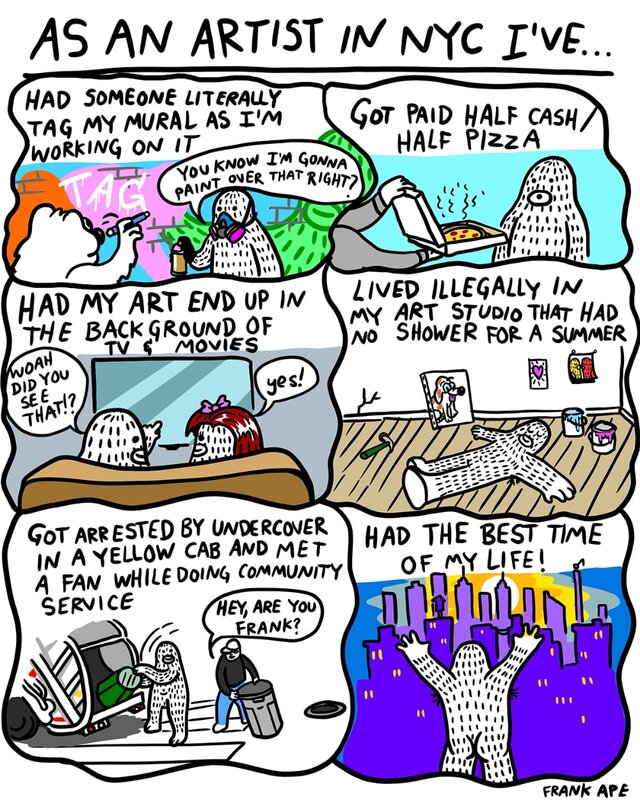
Could you imagine bringing another character to life? And what about sidekicks?
Frank has a few sidekicks, and a bunch of characters have made appearances over the years in the Frank universe.
If I was ever considering a new character outside of the Frank universe it would just have to, like Frank, come from the result of a necessary personal exploration. Sometimes you have to dig in the dirt a lot and if a flower grows that's amazing, but it’s an end result for me and wouldn't be the reason for starting off.
Interview by Pictoplasma on the occasion of the 12th NYC Conference, 2026
- 85 views
- 1x empathizes
